
Anemia is a global health issue that significantly affects quality of life, productivity, and rates of morbidity and mortality. The World Health Organization (WHO) reports that more than 30% of the world’s population experiences anemia, especially vulnerable groups such as pregnant women, children, and the elderly. To establish a quick and accurate diagnosis of anemia, hemoglobin (Hb) testing is the primary parameter that must be performed in various healthcare facilities.
In an era of healthcare services that demand speed and precision, the reliability of Hb testing devices and the quality of the strips used are critical factors. Errors in test strips or insufficient validation can lead to inaccurate results, potentially causing misdiagnosis or delayed treatment. Therefore, this article discusses the importance of validation, quality control, and Hb strip quality in supporting effective anemia screening—and how modern technology, such as the HemoSmart Gold from ApexBio, supports this process.
1. The Importance of Hemoglobin Testing in Anemia Screening
Hb testing is the most practical and efficient method for assessing anemia status. Low Hb indicates a reduced capacity of the blood to carry oxygen, which can lead to fatigue, decreased cognitive function, and serious complications in certain cases.
To ensure proper clinical interpretation, Hb results must come from high-quality devices and clinically validated strips.
2. Why Accuracy Validation Is Crucial
Accuracy validation ensures that Hb testing devices provide consistent results that align with laboratory standards. Without proper validation:
-
Hb values may read higher or lower than the actual condition,
-
the risk of misdiagnosis increases,
-
therapeutic decisions may become inappropriate,
-
and patient monitoring becomes suboptimal.
Low-quality or unstable Hb strips can cause significant variability in results. Therefore, healthcare facilities must conduct periodic accuracy checks through quality control (QC).
3. Strip Quality and Its Impact on Test Results
Hemoglobin test strips are a key component of point-of-care testing (POCT) devices. Strip quality determines:
-
the sensitivity of the chemical reaction,
-
reagent stability,
-
the ability to read blood samples accurately,
-
and the reproducibility of results under various environmental conditions.
Humidity, storage temperature, and manufacturing quality can affect strip performance. Therefore, using strips that have undergone stability testing and international certification is essential for healthcare settings.
4. The Role of Quality Control (QC) in Ensuring Reliable Results
Quality control ensures that devices and strips function according to standards. Routine QC helps:
-
detect changes in device performance,
-
identify damaged or unstable strips,
-
maintain accurate testing processes,
-
and uphold clinicians’ confidence in the results.
However, many healthcare facilities still overlook QC due to budget limitations or lack of equipment. Thus, the availability of accessible strip-and-control packages becomes an important advantage.
5. Advantages of the HemoSmart GOLD Hemoglobin Screening Meter
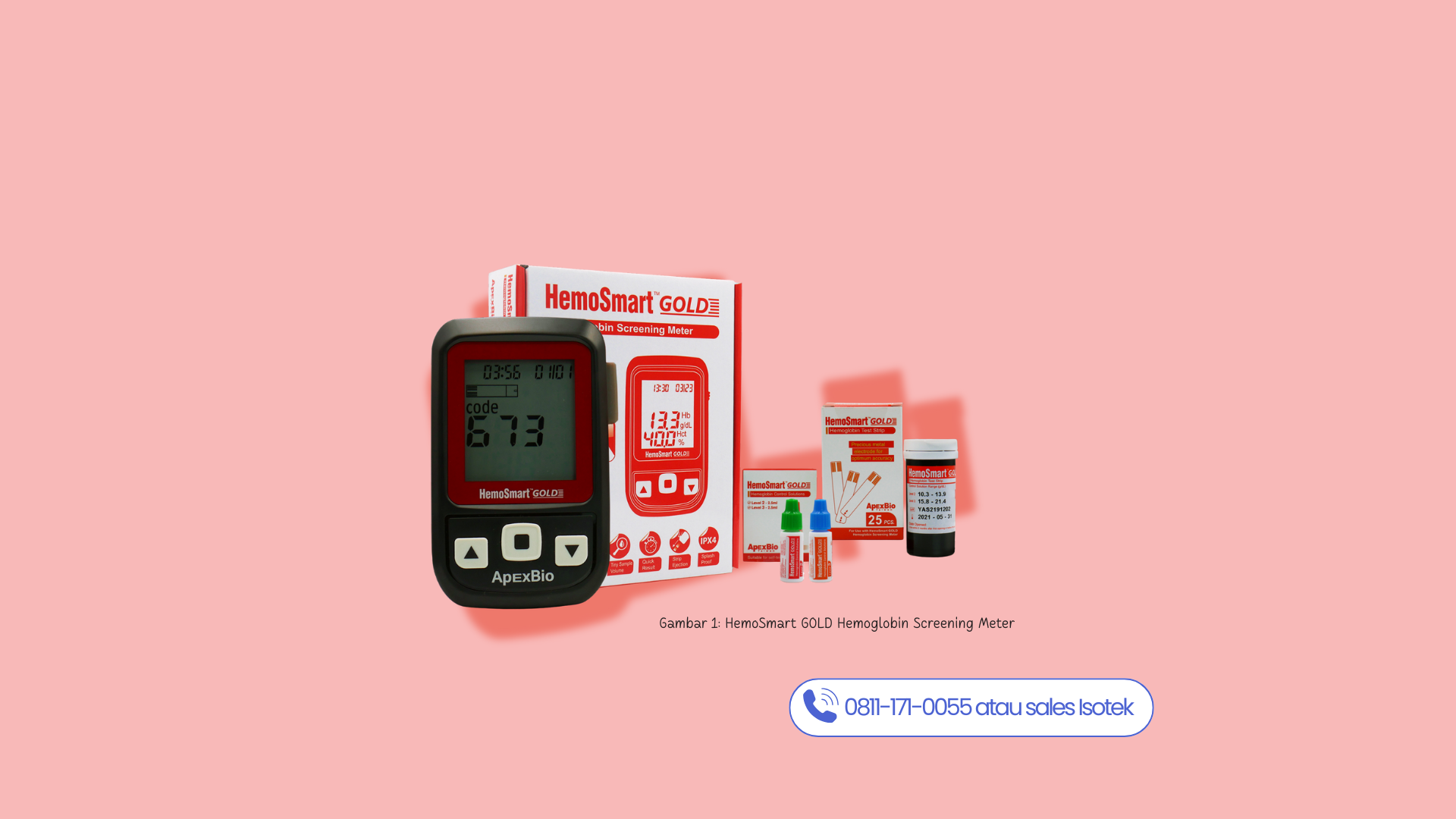
To accelerate anemia screening with optimal accuracy, the HemoSmart GOLD Hemoglobin Screening Meter offers a point-of-care solution with several significant advantages:
Key Advantages of the HemoSmart GOLD Hemoglobin Screening Meter:
-
Dual-Parameter Measurement
Measures Hemoglobin and Hematocrit in a single test, making it more effective and economical. -
Fast results within 5 seconds
Saves time and improves efficiency. -
Small sample volume (1 μL)
-
Wide measurement range (4–24 g/dL)
Capable of measuring both high and low hemoglobin levels. -
Equipped with a strip ejector
Makes strip disposal easier after testing. -
Large color LED display
Improves readability of results.
With its combination of accuracy, easy QC, and strip stability, HemoSmart GOLD Hemoglobin Screening Meter becomes an effective solution to both accelerate and improve the quality of anemia screening.
Hemoglobin testing is a fundamental component of anemia screening. To ensure accurate results, accuracy validation and strip quality must be top priorities in every healthcare facility. Unstable or inaccurate strips can negatively impact clinical decisions and lower the quality of healthcare services.
HemoSmart GOLD Hemoglobin Screening Meter offers a solution that meets these needs through high-quality strips, easy QC processes, and features that support precise testing.
Fast, accurate, and standardized anemia screening not only improves service efficiency but also has a direct impact on patient safety and health.
References
-
World Health Organization. (2023). Anaemia Fact Sheet.
-
Pasricha, S.-R., et al. (2021). “Diagnosis and Management of Iron Deficiency Anaemia.” The Lancet.
-
Killip, S., Bennett, J. M., & Chambers, M. D. (2007). “Iron Deficiency Anemia.” American Family Physician.
-
Hawkins, R. (2010). “Point-of-Care Testing for Hemoglobin in Primary Care.” Clinical Biochemistry.
-
ISO 15197:2013. Requirements for Quality and Competence in In Vitro Diagnostic Testing (relevant to QC and device accuracy).